
← WritingLaunches
Building for others since 2015. Now I'm building my own.
Lotus has built software for other people since 2015. Now I'm building my own apps, starting with Bobara, and here's why.
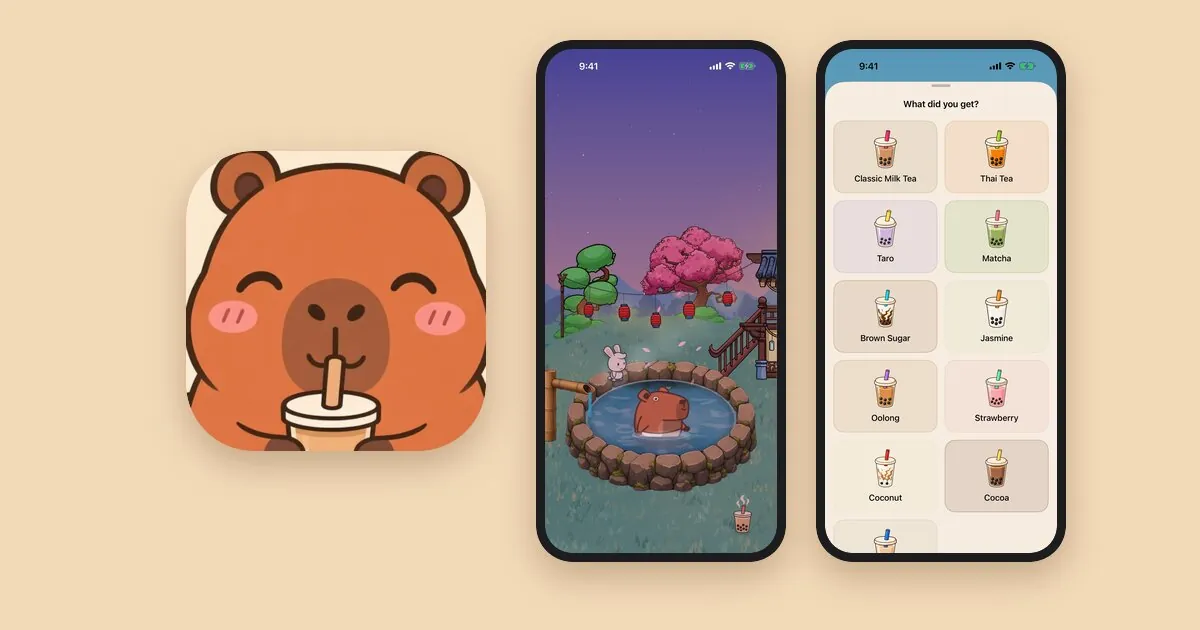
It's been a long time since anything went up here, and rather than pretend otherwise, I want to catch you up on what Lotus was, what's changed, and the app I've been building for myself over the last few months.
Building for other people
I've been building software professionally since October of 2008, and I did my own consulting for a long time before starting Lotus Apps in 2015. At its peak, Lotus was handling probably ten projects at any given moment across upwards of fifteen to twenty clients, with a team of six of us, mostly developers and one designer.
We always gravitated towards clients who appreciated attention to detail and were willing to go through the full discovery phase with us, putting in all of that groundwork up front. A lot of people came to us with a really clear idea of how their software needed to be built and what the outcome was going to be. Some had put in more effort than others before they found us, but discovery almost always showed they hadn't dug in far enough, not just into the technical requirements that really influence what gets built, but into how it could make money, who the audience would be, and who would actually be using it day to day.
That's the work that lets you fine-tune the workflows and user stories and make sure you build something that's actually going to solve the problem. A lot of the time the solution ended up being different from what the client thought it would be, and that's a really rewarding and exciting thing to go through with someone.
One fact I'm quietly proud of: I still have two of my very earliest clients on retainer. I do a small amount of work for them each month, helping them run their business from a technology perspective and maintaining software that has been successfully chugging along for a very, very long time. Some of it dates back to 2015 and 2016, and they're still using it to run their business and growing now more than ever.
Why now, and why say so publicly
For roughly the last seven years I've also held a full-time day job, so it's fair to ask why I'm making a change now and taking the time to say it out loud. The first reason is simply that I found the motivation, the energy, the time and the excitement to build Bobara, and I want this website to actually reflect what I'm doing now. I also just wanted to make something I'm proud of again.
And honestly, the only reason I have the time for any of this is that I'm a parent, and my child is old enough now that, for the first time in a long time, I have some energy left at the end of the day. Between that and the excitement of the app idea, it felt like the right time to revive my passion for creating high-quality software.
Bobara
The first app is Bobara, coming November 9, 2026 for iPhone, iPad and Apple Watch. The idea came from a simple love of boba tea, honestly closer to an obsession, along with an appreciation for high-quality, well-designed, intentional software that delights and serves a purpose. It also ties in with a tattoo I got last year of a capybara drinking a boba, after a trip to Japan that left a real impression on me.
I had a desire to create something very special again and to put a version of myself out there into the world. Bobara has been a labor of love, and I hope it delights people and brings a smile to their faces as part of a busy day, in the stressful world we all live in right now.
In Bobara, Momo is a capybara who lives in a small hot spring on your iPhone, iPad and Apple Watch. When you buy a boba tea in real life, you tap it in and something arrives: a new friend for the water, a prize for the tea house shelf, or a little more time with someone who's already there. His onsen gets the same sky you do, and nothing decays, nothing expires, and nothing ever asks anything of you.
I think other boba tea lovers will really resonate with it, and so will people who appreciate graphic and industrial design and well-crafted Apple software. It's $4.99, bought once, and there's more about how I made it in the Bobara case study.
Doing my own discovery first
All of those years of client work taught me how much value there is in the market research and discovery process I ran for Lotus clients, so I ran it on Bobara before I ever wrote a single line of code. I wanted to really validate that the market wasn't saturated and that there was demand there, so I did some projections on who the target audience would be and tied that into keywords, SEO and searchability.
I gave real thought to a marketing strategy too: how I'd market it in real life by partnering with local boba tea shops, how I'd collaborate with social media micro-creators, and how much I might spend on ads. All of that came first, to make sure there really was a possibility of doing this well.
On top of all that, I prototyped quickly so I could explore specific ideas and interactions without having a full app built. I scaffolded prototypes for things like using the CloudKit SDK for the first time and a 2D, sprite-based, highly graphical interface, which was something I'd never done before, and even built one comparing SwiftUI with SpriteKit.
I kept prototyping until I had every decision captured, which gave me a formal plan, an architecture and a marketing strategy, all defined to the point where it was much easier to execute. That left me free to spend my time on the exciting details, like the actual graphic style and assets, securing a sound library, and artist work.
I've put quite a lot of my free time into it, in the evenings, late nights, early mornings and lunch breaks, and a good amount of it happened walking around the park and the neighborhood using dictation. It took a few months to get from the first idea to submitting it to the App Store.
Consulting
Lotus still takes on client work occasionally, and those two retainer clients are proof of that. I'm not looking to grow that side of the business, but if you have a project you think I'd be a genuinely good fit for, I'd love to hear about it at hello@madebylotus.com.
What's next
Bobara is the first of several apps I'm planning, and I'm looking forward to sharing more as they come together.
Bobara comes out on November 9. You can pre-order it on the App Store now, and find out more at bobara.app.