
← WritingCode
How I write and publish this blog by voice, with Claude Duet
How a small custom skill and a Cloudflare deploy turn a voice note into a pull request, and a published post once I merge it.
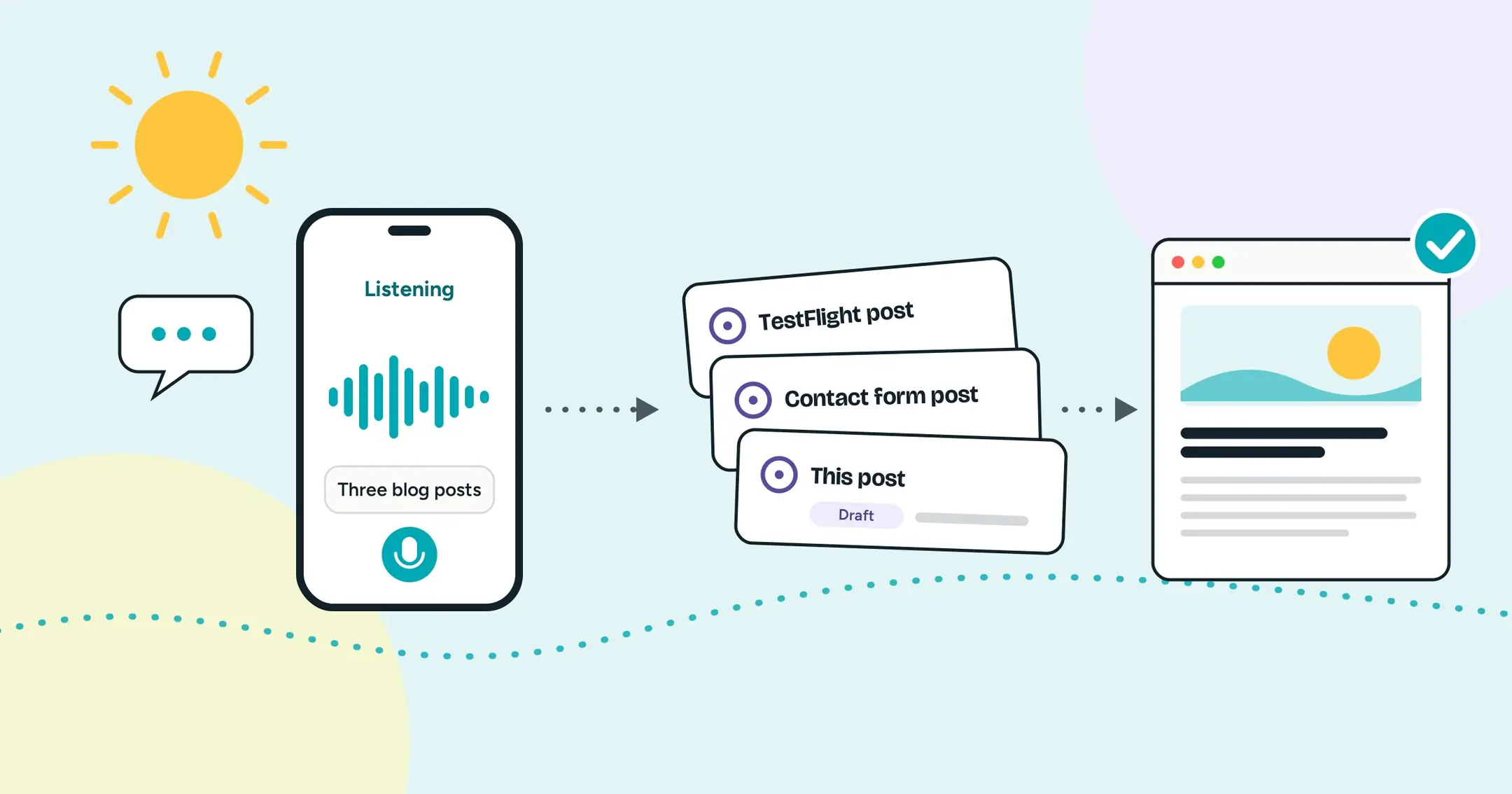
This afternoon I asked for three blog posts from my phone, by voice, without being anywhere near a computer, and within a few minutes each one was being written as its own pull request against this site, waiting for me to review it. This post is one of the three. I want to show how that works, because there's nothing exotic in it: a static website, one custom skill that lives in the repository, and a deploy that only ever runs when I merge.
I typically write blog posts either while enjoying a walk, decompressing between tasks and getting a little bit of steps and sunshine, or sometimes even in the car, with the phone on the charger and Claude Duet working in voice mode back and forth, hands-free, which works wonderfully.
Why the blog lives in the repository now
The blog used to live in HubSpot, separate from the rest of the site. When I rebuilt madebylotus.com this fall, I moved it into the site's own repository, mainly because I want to write more regularly, and a static blog lets a skill turn a walk-and-dictate session into a GitHub pull request that deploys automatically on merge.
I really enjoy interacting with technology over voice, and I do my best thinking while I'm moving my body, so that's why I built the skill, and I'd already been using it before today. What comes out of a dictation is long and unpunctuated, with plenty of filler, so the work is turning it into something a reader enjoys while keeping the fact that a real person said it.
The site itself is plain Jekyll with Tailwind, built into static files. Since November 16 it's served by Cloudflare Workers® as static assets, on the Free plan, so there's no server for me to look after.
The skill
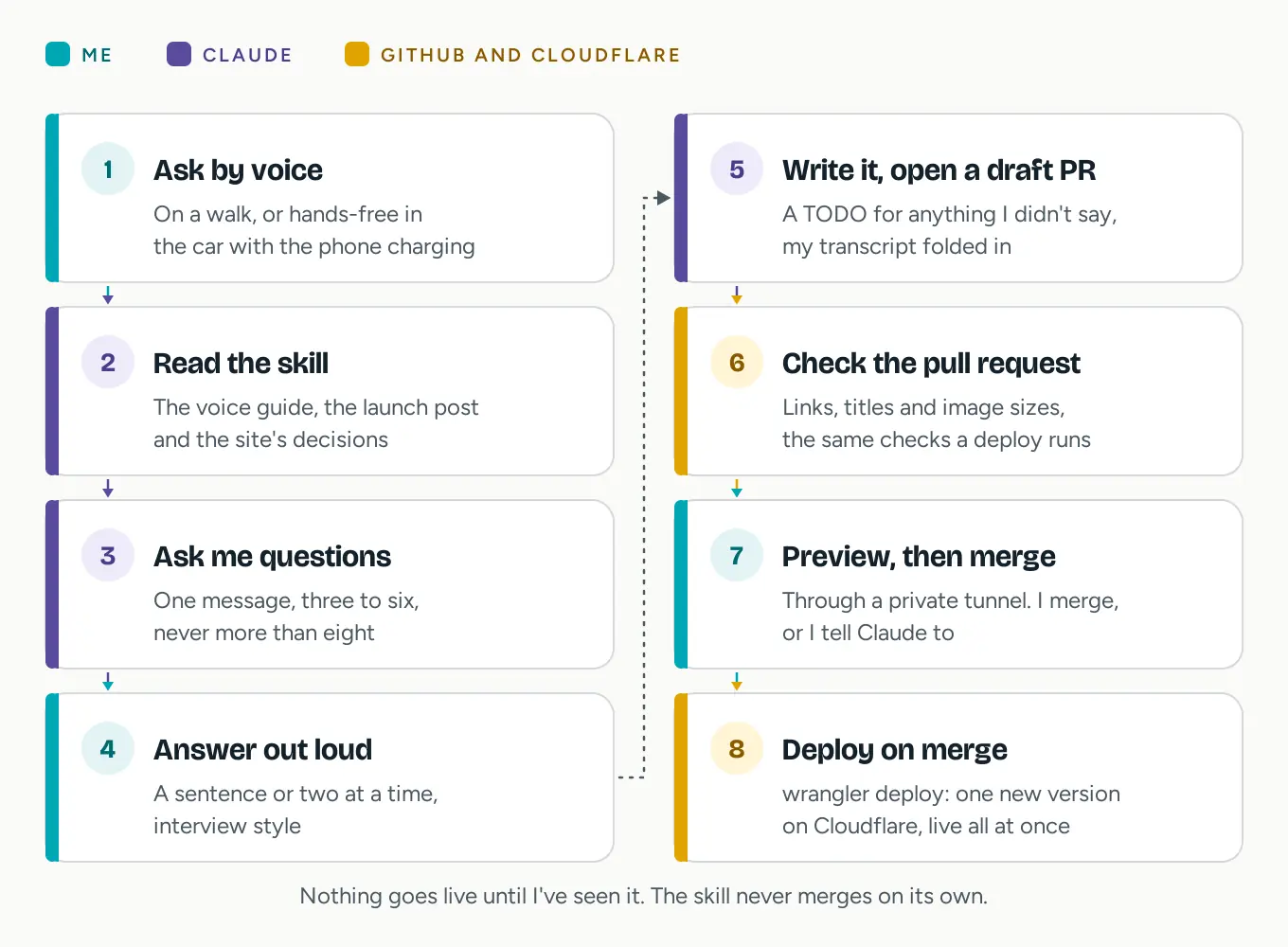
The skill is a Markdown file that sits in the repository, in .claude/skills/dictate-post/, so any Claude session working in the site picks it up, and it walks through the same steps every time:
- Read the voice guide, the one post I've approved in my current voice, and the site's list of decisions, before anything else.
- Take the dictation and keep my words exactly as I gave them.
- Ask me questions in one message, while I'm still in the flow, usually three to six and never more than eight.
- Write the post, then make the file: the slug, the date, the front matter and the pictures.
- Build the site and run its checks.
- Open a pull request, as a draft if anything is still open, with my raw transcript folded into it so I can compare.
The most important rule in it is the one it opens with: "You never merge, and you never publish. Your job ends when the PR is open."
The other rule I care about is that it invents nothing. Where a post needs a fact I didn't give it, a number or a date or how something turned out, it leaves a marker in plain sight instead of guessing:
**TODO: how many shops said yes? You said "a few".**
Every marker is listed in the pull request too, and a post with one in it isn't ready to publish.
Teaching it how I sound
The skill leans on a voice guide that lives next to it. Getting that right took four drafts of my launch post. I turned down the first two as really terse, even though every fact was there, and the third read a little too much like train of thought. The fourth sat more in the middle, and that's the one that went live.
The guide keeps the before and after of that same passage, the average sentence length I'm aiming for, the habits and phrases I'd keep from a dictation, and a list of words I don't use, like "thrilled", "journey" and "leverage". When a draft doesn't sound like me, I say so, and the fix can go into the guide so the next post starts better.
Asking for three posts at once
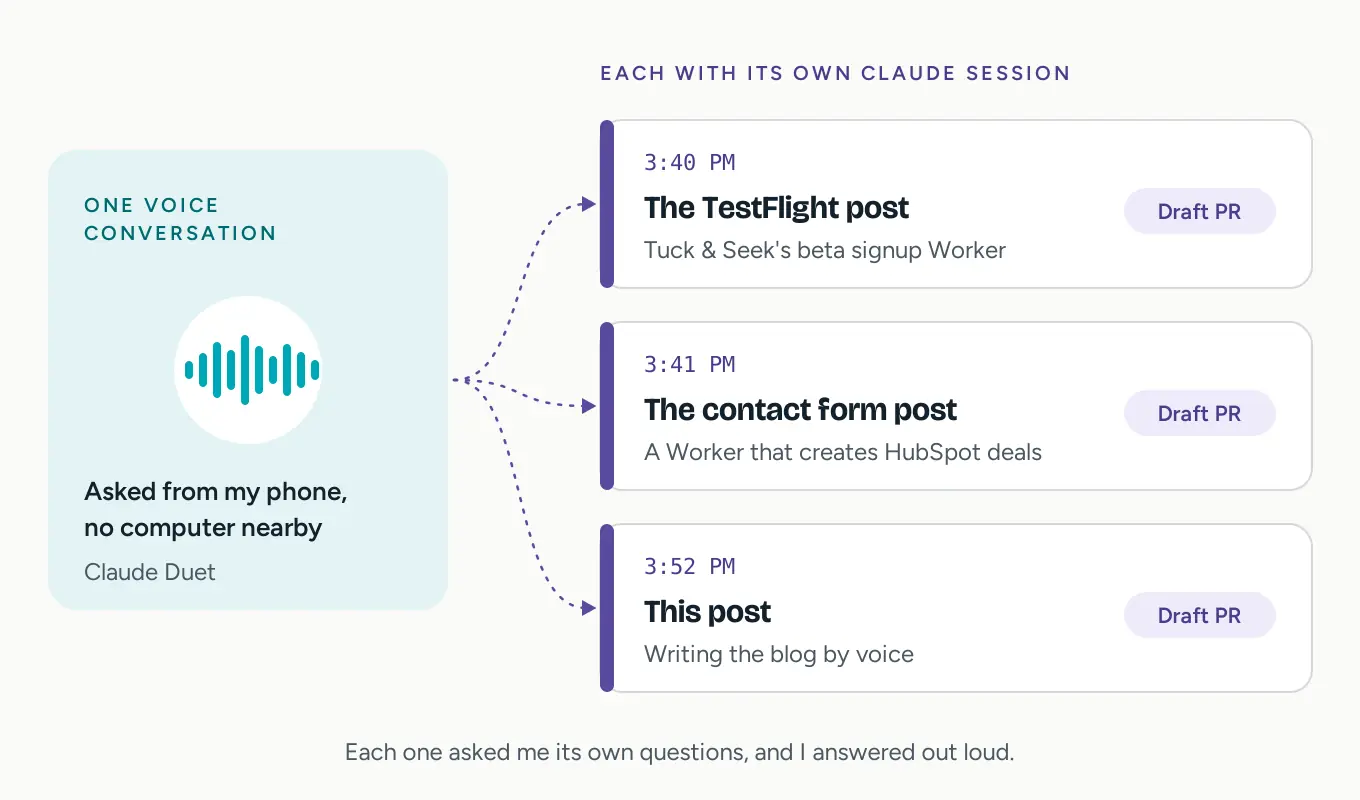
Today I used Claude Duet on my phone, in one voice conversation. In about twelve minutes I asked for a post on the Worker that signs up TestFlight beta testers for Tuck & Seek, another on the Worker behind the new contact form on my Consulting page, and then this one. Each became its own task, with its own Claude session working in the repository at the same time.
Each one read the skill and came back with questions before it wrote much at all, like whether the post was for developers building the same thing or for people thinking about hiring me. I answered out loud, a sentence or two at a time, and Claude Duet passed my answers to the right post. All in, I spent about 10 minutes on the dictation and the back and forth, answering questions interview style, and when I checked back about 30 minutes later there was a polished post waiting for me.
Seeing it before it goes live
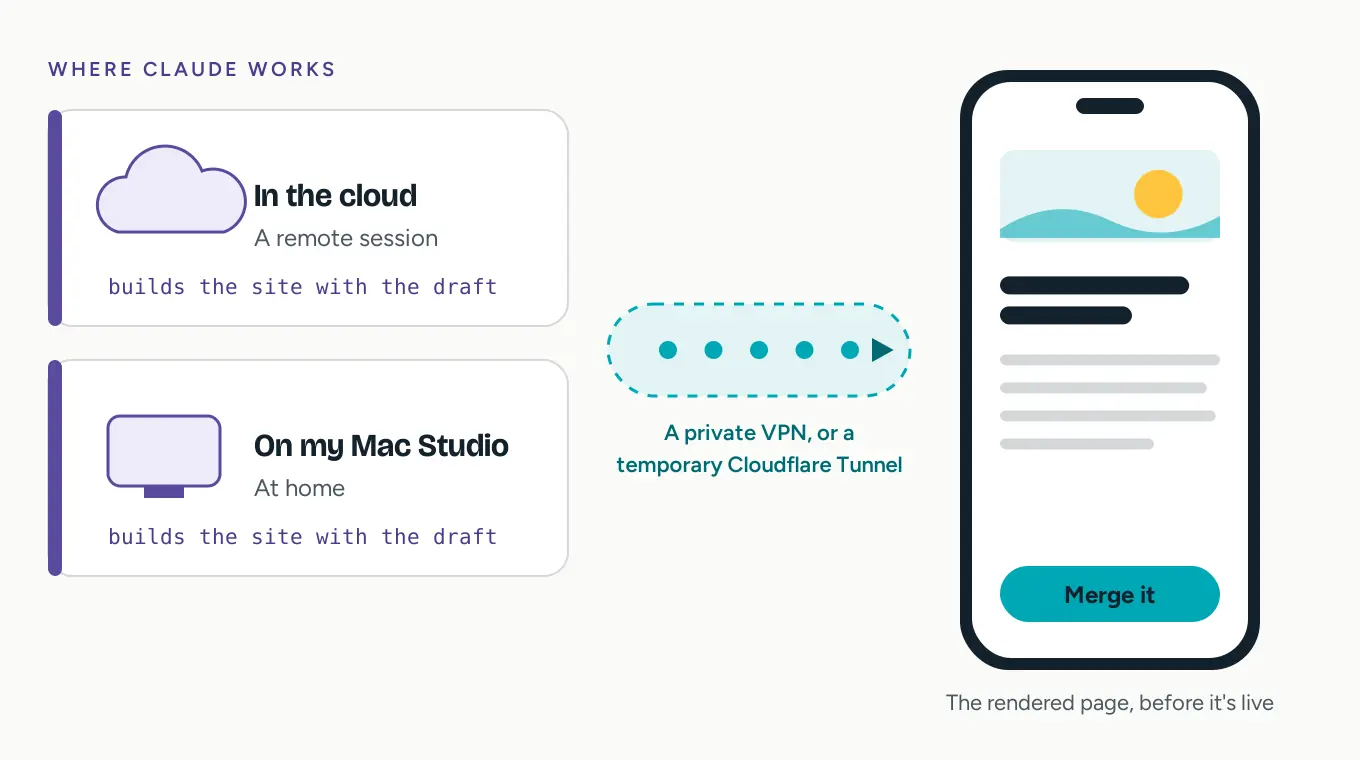
Before anything merges, I want to see the page the way a reader will. Claude is usually working either in the cloud or on my Mac Studio, and I usually end up opening a private VPN tunnel, or a temporary Cloudflare Tunnel, so I can look at the website as it's rendered, as a preview, before I tell Claude to merge the pull request. I usually review on my phone, and sometimes I look at it again on my computer another day.
Every pull request also gets the same build and checks that run before a deploy, which catch things like a missing description, a broken link or a picture that's too large, so those are caught before I ever open the preview.
How the deploy stays mine
Merging to master is the only way the site changes. The skill never merges on its own, so once I've seen the preview, I either merge the pull request myself or tell Claude to merge it. Either way, a GitHub Actions workflow then builds the site, runs the same checks again, and runs wrangler deploy, which uploads the whole site to Cloudflare as one new version and switches to it all at once. A few minutes later the new post is live everywhere.
The Cloudflare token lives only in GitHub's secrets, never in the repository, so a session working in the code has no way to deploy by hand, and the repository's instructions tell it not to touch Cloudflare at all. If something does go wrong, rolling back is the same move in reverse: revert the commit in a pull request and merge it, or roll the Worker back to its previous version in Cloudflare.
And the hosting itself is free.
Why I like writing this way
I enjoy this style of blogging because I get my steps in, I enjoy the sunshine, I'm moving my body, and I get to dictate. It's a back and forth, fairly natural conversation.
Cloudflare and Cloudflare Workers are trademarks and/or registered trademarks of Cloudflare, Inc. in the United States and other jurisdictions.